- Training
- Service
- Promotion
- Schedule
- Testing Center
- News
- Contact


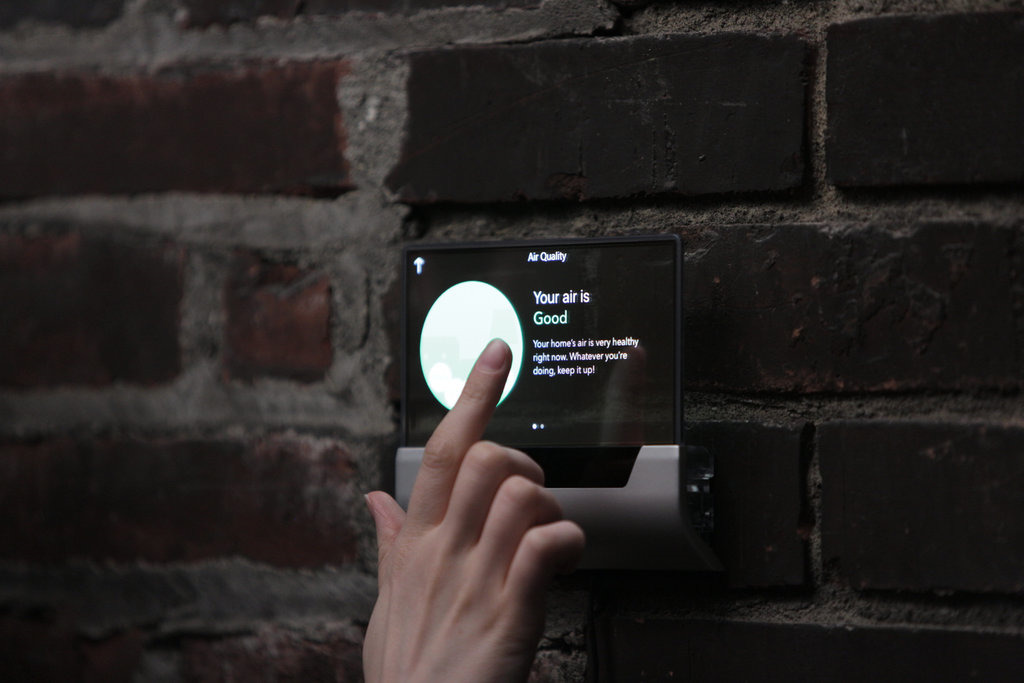
Johnson Controls has been a top provider of building technologies and solutions for more than a century. Today, the company continues to lead the way with the GLAS smart thermostat based on the Windows 10 IoT Core operating system. Connected to the Azure IoT solution accelerators, GLAS gives building owners remote access through web and mobile apps. to monitor and control features of the heating and cooling system. The solution can be intuitively managed through touch and voice commands. Easy to use and implement, the solution enables property managers and owners a way to affordably make buildings more comfortable.
“It made more sense to use Windows IoT Core for GLAS because we wanted to focus more on user experience and design, while gaining the peace of mind that Windows security and updates provide. It’s allowed us to shift our focus to product quality and the unique experience this device gives to customers.” - Joseph Ribbich: Program Lead, GLAS and Emerging Technologies
Thermostats and other controls changed little for a century, until the 1980s when digital systems began to replace analog. And in recent years, the convergence of sensors, mobile technologies, and cloud computing has given rise to new opportunities to improve comfort, safety, and convenience. Smartphones have become ubiquitous, and people increasingly expect to get insights on their mobile devices. The only challenge is finding a way to tap into data that has historically resided within the thermostat.
Johnson Controls realized that connecting edge devices like thermostats to the cloud would be a gamechanger. “We knew that if we could bring those digital controls that were typically on-premises to the cloud, we could extend them out to consumer devices like smartphones,” says Joseph Ribbich, Program Lead, GLAS and Emerging Technologies at Johnson Controls.
Momentum started to build when Johnson Controls employees presented an idea during the company’s internal Tech Days challenge. The event gives employees two days to present ideas to company leaders for potential future development. GLAS, a feature-rich smart thermostat that would provide mobile access to controls and information, immediately grabbed the company leaders’ attention. In addition to enabling remote management, the GLAS thermostat would be the first to control ambient temperature as well as monitor air quality. The concept gained traction, and Johnson Controls began building out an end-to-end solution that includes a beautifully designed, touchscreen thermostat integrated with cloud services and mobile devices.
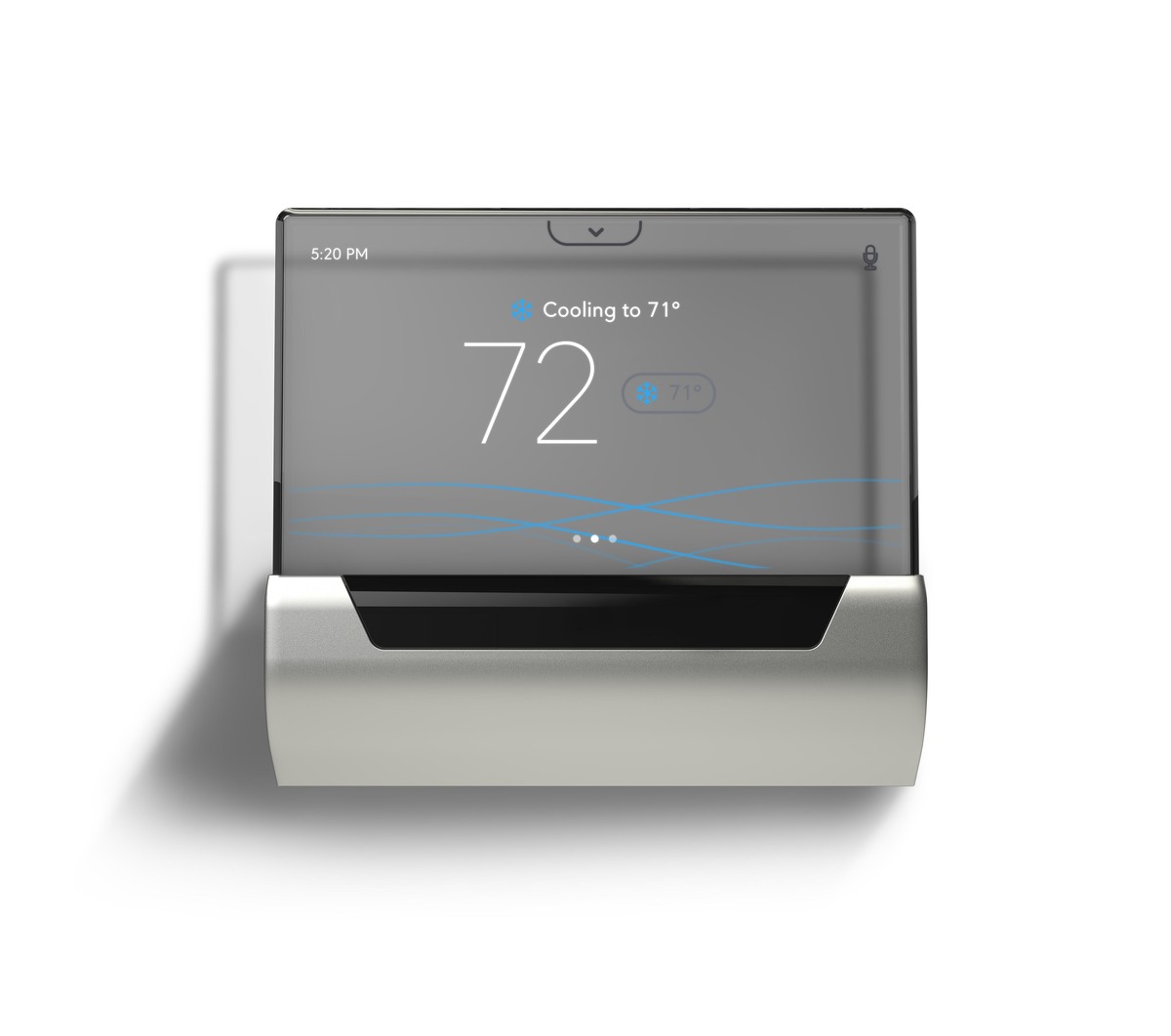
Running the Windows 10 IoT Core operating system, the GLAS thermostat connects to the Azure IoT solution accelerators. Johnson Controls chose the technology platform for multiple reasons, but security, scalability, and ease-of-development topped the list. Pat Mulcahy, General Manager, Thermostats and Sensors at Johnson Controls, explains, “Security is a key factor for us as we follow this trend of integrating more solutions into on-premises equipment and putting processing power wherever it makes the most sense—whether it’s on the device or the cloud. One of the reasons we selected the Microsoft platform is the ability to connect Windows 10 IoT Core with Azure and ensure secure connections.”
Johnson Controls used Microsoft Visual Studio 2017 and Visual Studio Online for coding across all thermostat and cloud-based apps, and Xamarin for mobile app development. In addition, the Universal Windows Platform enabled developers to create a single set of code that would run on virtually any device. As a result, home owners and building managers can use their favorite Windows, Android, or iOS mobile devices to remotely monitor air quality and adjust controls.
Taking advantage of built-in technologies like Cortana would also enable voice activation and make for an easier, more intuitive experience without a lot of development headaches. “It made more sense to use Windows IoT Core for GLAS because we wanted to focus more on user experience and design, while gaining the confidence and peace of mind that Windows security and updates provide,” says Ribbich. “It’s allowed us to shift our focus to product quality and the unique experience this device gives to customers.”
Johnson Controls wanted both home owners and light commercial building managers to experience the same convenience, including mobile access to information. The streamlined development environment played an important role in reaching that objective. “It’s the same platform and code base wherever it’s deployed,” says Ribbich. “We can take GLAS to a light commercial building and enable building managers to control that environment the same way they do at home.”
Although the solution currently focuses on thermostats, it’s capable of connecting with other devices through Microsoft cloud services. But regardless of scale and location, the experience will be a familiar one for Johnson Controls customers.
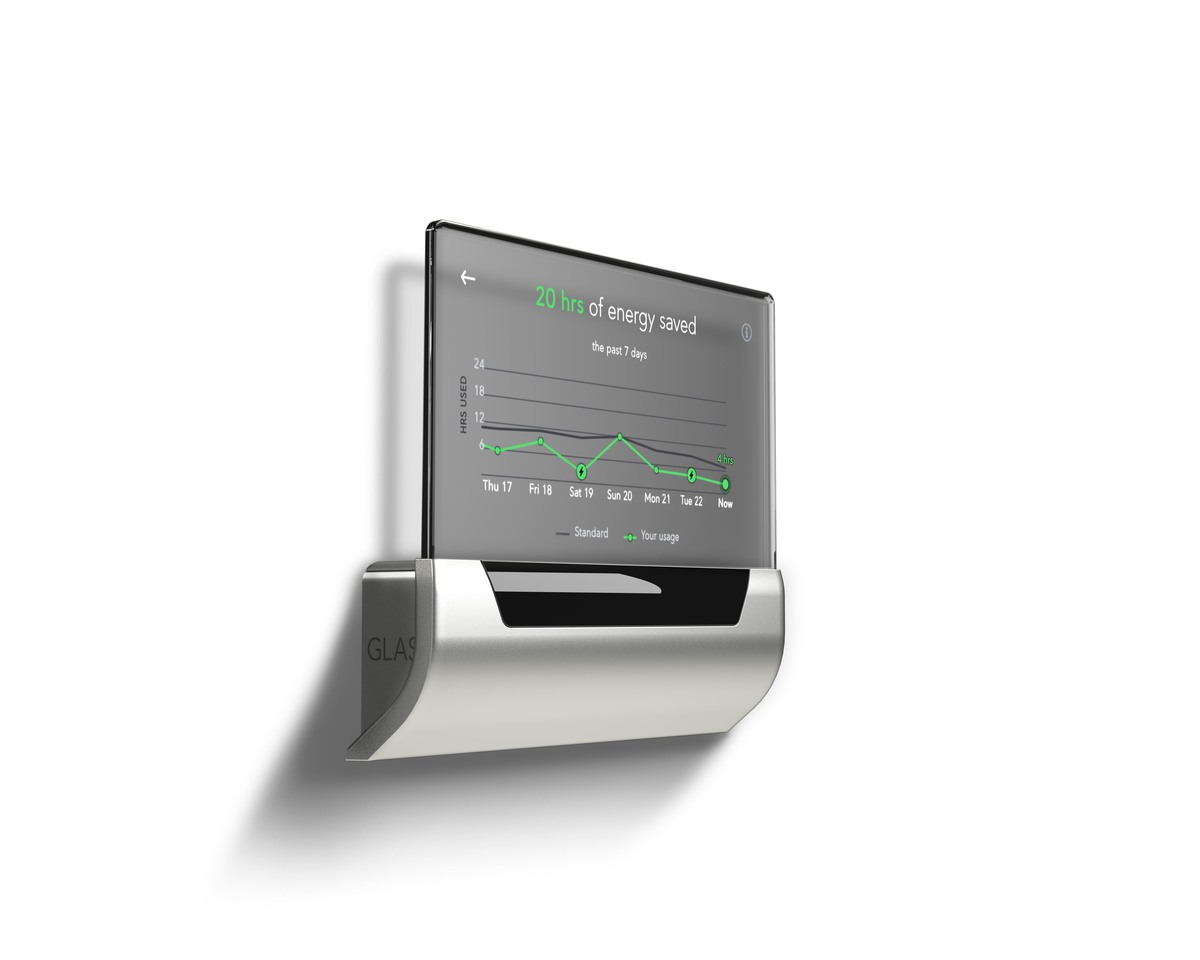
GLAS responds intelligently and automatically to ensure that rooms are at the desired temperature. Built-in sensors also detect airborne substances such as volatile organic compounds and carbon dioxide, and integrates the information with temperature and outdoor air quality data including allergen levels, the air pollution index, and ultra violet levels. The system continuously analyzes the data and alerts home owners and building managers if air quality strays from desired parameters.
More efficient air quality management has multiple benefits, with improved comfort topping the list. In addition, Johnson Controls expects that simplified management will reduce maintenance costs and complexity. Nick Van Derven, Principal Engineer GLAS at Johnson Controls, notes, “We’re able to give them the data they need with one device instead of requiring them to install multiple sensors.”
Smart thermostats are only the beginning, which shouldn’t surprise anyone familiar with Johnson Controls. Ribbich concludes, “With Windows 10 IoT Core and Azure, we can release a product now and have the reliability and scalability we need to look to the future. And by scalable, I mean not only the number of devices, but also an environment where edge processing and machine learning can be applied. This platform enables us to take advantage of all of that.”
Source: Microsoft